
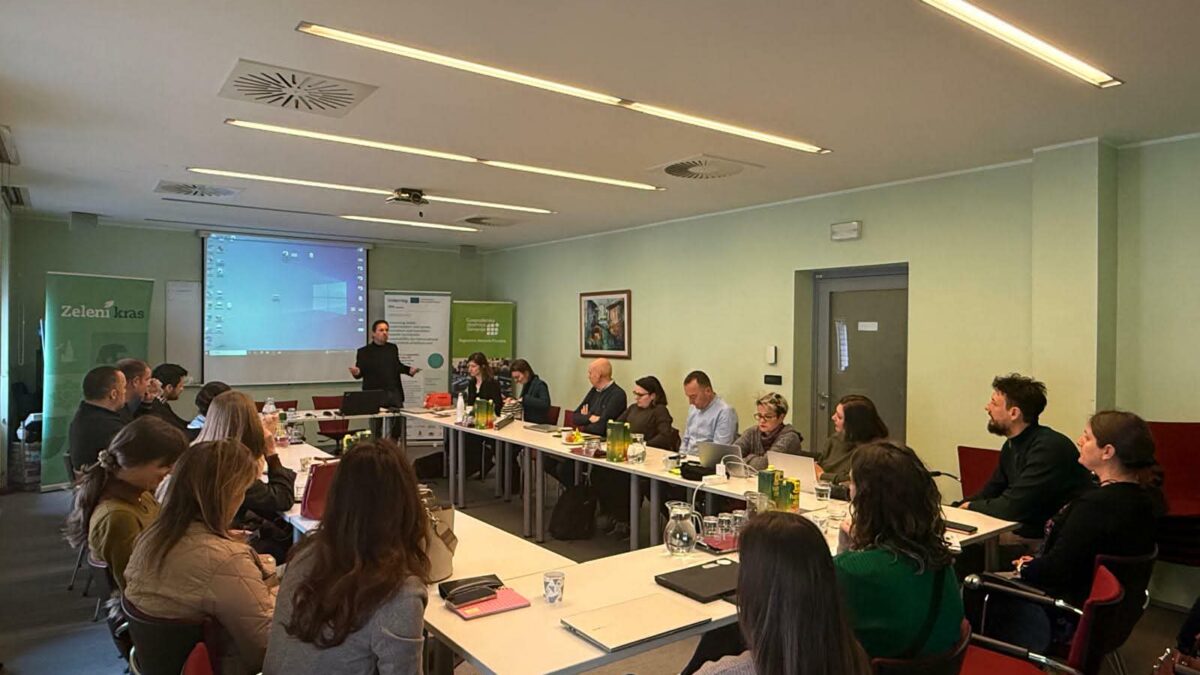
KEPA actively participated in the 6th Learning & Exchange Visit Meeting, successfully organized by project partner RDA Green Karst in Slovenia on April 1–2, 2026.
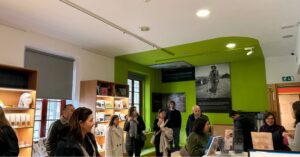
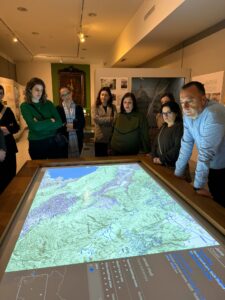
The meeting began with presentations of best practices from two innovative companies and one cultural institution, aiming to exchange knowledge and experiences on modern approaches to sustainable development and innovation. In particular, Willy Stadler Ltd (STADLER Test and Innovation Center) presented an automated system for sorting waste by color and material, enabling its reuse or recycling. This was followed by a joint presentation from GreenGeko Ltd. (biodynamic lighting and biophilia), AethLabs (air quality sensors), and Nesteh Ltd (smart building management systems), showcasing their innovative products and their shared vision for creating healthy and sustainable working environments. During the visit to the Regional Museum Notranjska, the museum team presented its achievement of the international Green Key sustainability certification, awarded for its efforts in efficient use of non-renewable resources and reduction of environmental impact. They also introduced partners to the ways in which visitors are engaged and sensitized to issues of sustainable development, nature conservation, and cultural heritage protection.
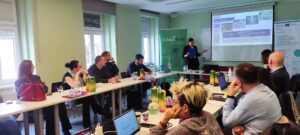
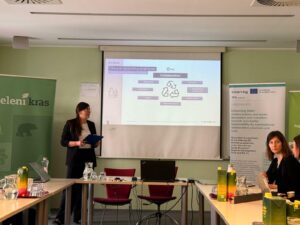
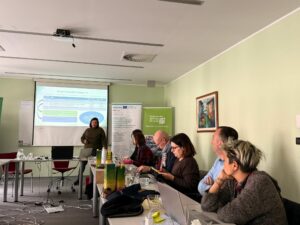
The meeting continued with the partners’ session, during which KEPA presented the project’s first key deliverable: the “Strategy for enhancing successful transnational interaction between R&D and the business community towards green innovation.” The aim of the presentation was to ensure a shared understanding of the Strategy and to discuss possible improvements, so that it can be adopted not only by project partners but also by a wider range of stakeholders, thereby strengthening its impact across multiple policy levels in the Ionian–Adriatic region. In addition, the progress of the remaining project activities was presented and discussed, along with key issues related to ensuring the timely implementation of the project.
On the following day, project partners carried out a study visit to the Municipality of Ljubljana, where they were informed about its role within the European initiative “Mission 100 Climate-Neutral and Smart Cities” and participated in the “Green Office” workshop organized by Umanoterra. In the first part of the visit, participants learned how Ljubljana contributes to accelerating the transition towards climate-neutral and smart cities by 2030. In the second part, partners worked in groups with the support of Umanoterra to design concrete measures for improving the sustainability of their office activities and to explore ways of transferring sustainable solutions to their organizations.
The two-day meeting in Slovenia marked an important milestone for the GREENSMES project, as the first key project outcome was presented, laying the groundwork for the region’s green transition. At the same time, it strengthened knowledge exchange and promoted innovative green practices.